Tasty SDK: project facts
- Project
- Tasty SDK
- Period
- 2024
- Role
- Solo Developer
- Summary
- Embeddable testimonial widget platform
- Description
- An embeddable widget platform that lets developers add testimonial forms to their sites. I built the lightweight client-side widget, set up the analytics tracking backend, and built a dashboard where users can see how their widgets are performing.
- Domains
- SDK Development, Embeddable Systems, Developer Tooling, Dashboard Design
- Technologies
- Next.js, React, TypeScript, SSR, Widget Systems
- Ownership
- The embeddable widget script design and logic
- Ownership
- Dashboard interface for widget customization
- Ownership
- Widget view and click tracking analytics APIs
- Ownership
- Vanilla Javascript rendering and lifecycle hooks
- Ownership
- Documentation and copy-paste installation snippets
- Learning
- Building SDKs is a lesson in paranoia. You have to assume the host website has bad scripts, slow networks, and weird global CSS, and make sure your widget survives anyway.
- Professional signal
- I care about building lightweight, bulletproof developer tools that integrate easily without causing headache.
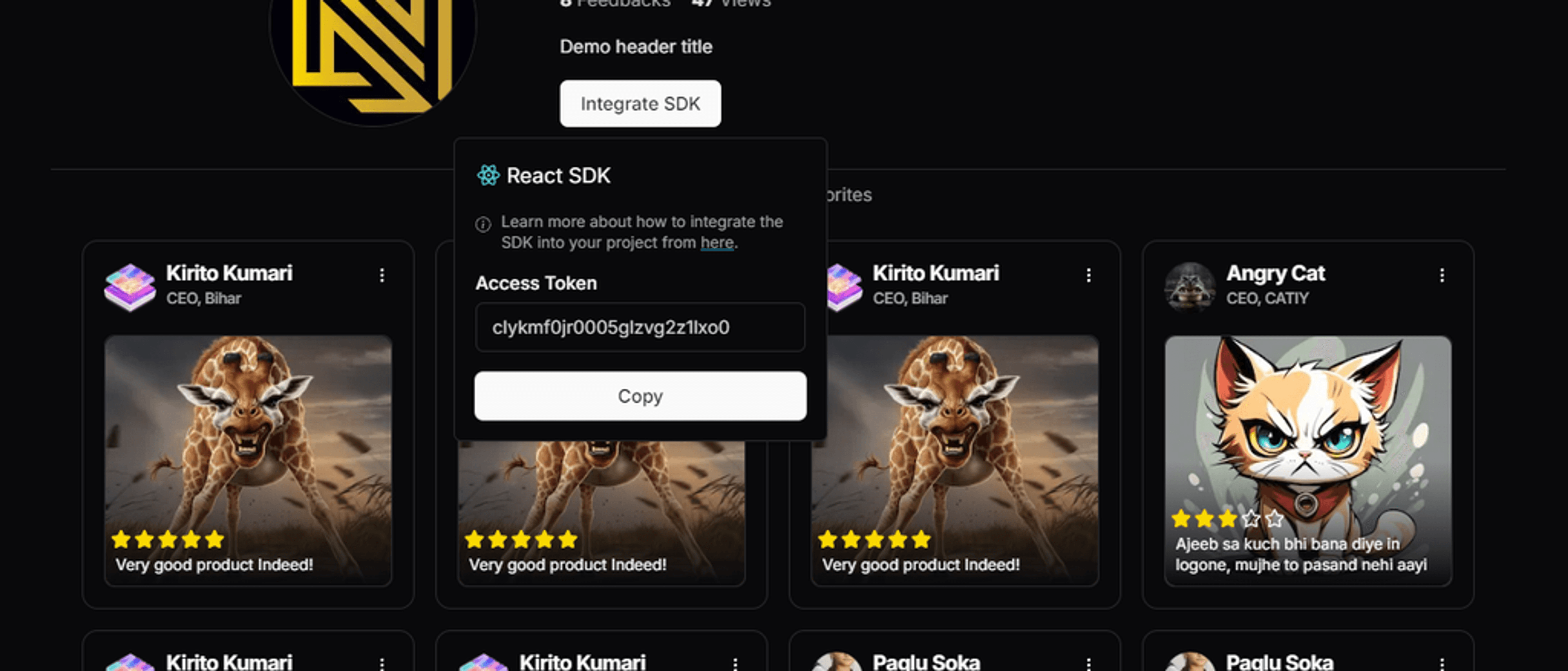
an embeddable widget platform that lets developers add testimonial forms to their sites. i built the lightweight client-side widget, set up the analytics tracking backend, and built a dashboard where users can see how their widgets are performing.
adding testimonials to websites should take a few minutes, not hours.
i wrote the widget using lightweight vanilla Javascript with no external dependencies so the bundle stayed under 10KB. i made it load asynchronously so it wouldnt block the host pages load time, and built a separate dashboard in Next.js where customers could customize their forms and see views and conversion charts.
i shipped a working widget SDK and dashboard. the project showed me how to design developer-facing tools that are easy to drop into any website, whether it is built with WordPress, Next.js, or plain HTML.
What I actually owned
- ·the embeddable widget script design and logic
- ·dashboard interface for widget customization
- ·widget view and click tracking analytics APIs
- ·vanilla Javascript rendering and lifecycle hooks
- ·documentation and copy-paste installation snippets
What became difficult
when you build a script that other people embed on their websites, it has to be tiny, load instantly, and never break their page. if our script was too large or threw a single javascript error, it would hurt their sites performance or break their layout, so I had to make it extremely light and isolated.
What I learned
building SDKs is a lesson in paranoia. you have to assume the host website has bad scripts, slow networks, and weird global CSS, and make sure your widget survives anyway.
What surprised me
building the widget was easy. making it survive random websites was difficult.
Before → After
| Before | After |
|---|---|
| bloated slow embeds | sub-10KB async script |
| leaking host styles | isolated Shadow DOM widget |
| untrackable widget clicks | dashboard analytics tracking |
Small opinion
SDKs are mostly about surviving strange environments.
What I would improve now
i would set up a global CDN (like Cloudflare or Vercel Edge) to serve the widget script from locations closer to the user to make loading even faster. id also write a helper library for React and Vue to make integration even easier for developers using those frameworks.
Random things I remember
- ·i spent hours testing the embed script on random website builders like Squarespace, Wix, and WordPress to see if they would break our styling.
- ·seeing the widget load perfectly inside a completely broken Web v1 site was incredibly satisfying.
i care about building lightweight, bulletproof developer tools that integrate easily without causing headache.