Gaming Marketplace: project facts
- Project
- Gaming Marketplace
- Period
- 2024
- Role
- Fullstack Engineer
- Summary
- Web3 gaming ecosystem platform
- Description
- A platform for Web3 gamers that combined live streaming, online courses, 1:1 video calls, and crypto payments. I worked on the 1:1 calling features using WebRTC, built a custom content manager for course creators, and integrated Farcaster for social coordination.
- Domains
- Platform Engineering, Creator Economy, Realtime Systems, Web3
- Technologies
- Next.js, NestJS, TypeScript, WebRTC, Farcaster, Smart Contracts
- Ownership
- 1:1 coaching WebRTC video calling system
- Ownership
- Custom CMS backend and frontend for course creation
- Ownership
- Farcaster login and feed integrations
- Ownership
- Crypto payment checkout interface and backend routes
- Ownership
- State management for the marketplace checkout flow
- Learning
- Big products become complicated much faster than expected. It is almost always better to launch a single working feature than trying to ship a massive, multi-feature platform all at once.
- Professional signal
- Im not afraid to jump into large, highly complex codebases and tackle the messy integration parts.
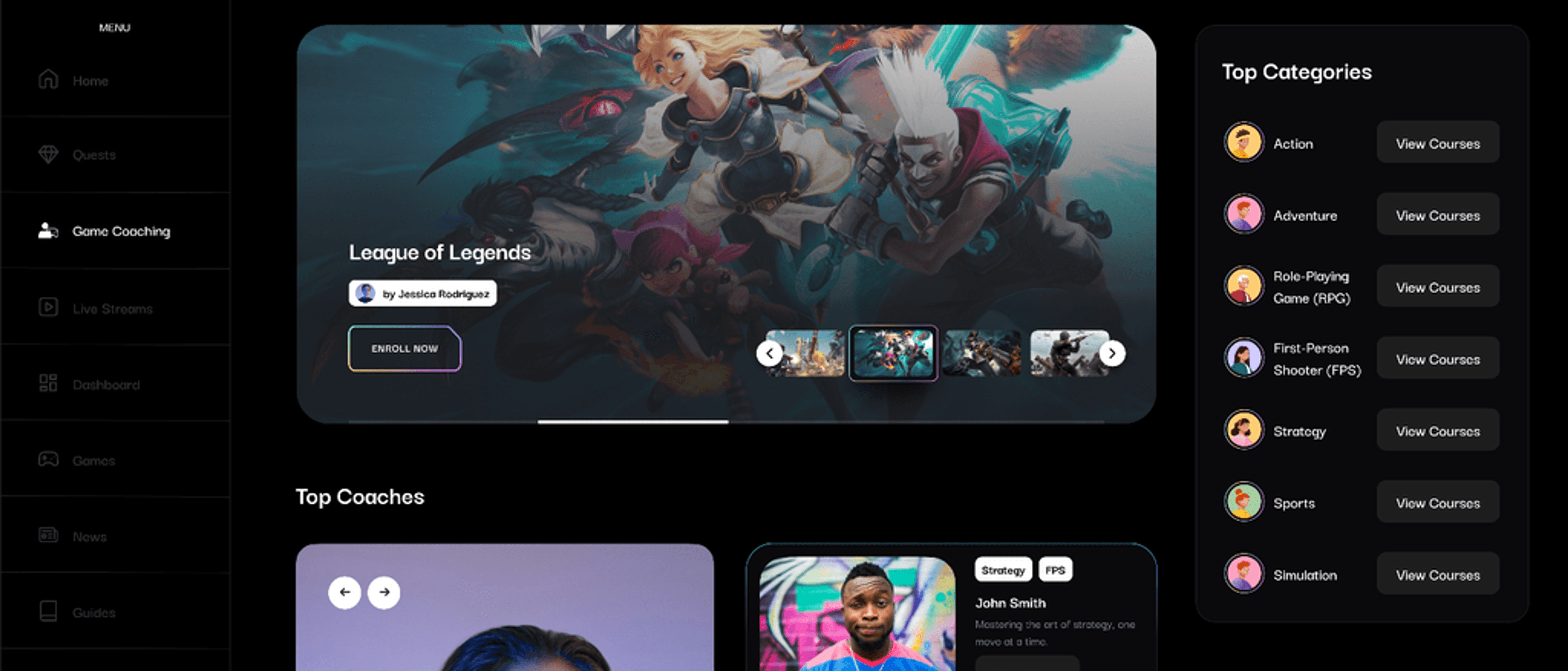
a platform for Web3 gamers that combined live streaming, online courses, 1:1 video calls, and crypto payments. i worked on the 1:1 calling features using WebRTC, built a custom content manager for course creators, and integrated Farcaster for social coordination.
we wanted to bring courses, calls, and gaming communities into one place.
i focused on building a clean WebRTC implementation for 1:1 coach sessions and wrote a custom CMS backend to handle course uploads and content access. i integrated Farcaster feeds to build community features, and wired up our checkout flows to handle crypto payments using smart contracts.
we got about 70% of the platform fully built before the company decided to adjust its direction. it was a massive learning experience in how to structure a large, feature-heavy application without letting the codebase spin out of control.
What I actually owned
- ·1:1 coaching WebRTC video calling system
- ·custom CMS backend and frontend for course creation
- ·farcaster login and feed integrations
- ·crypto payment checkout interface and backend routes
- ·state management for the marketplace checkout flow
What became difficult
we tried to build everything at once: video calls, course uploads, payments, and social feeds. handling all these moving pieces under a single codebase made it really easy for features to break each other, so keeping the app stable and our database schemas clean was a major challenge.
What I learned
big products become complicated much faster than expected. it is almost always better to launch a single working feature than trying to ship a massive, multi-feature platform all at once.
What surprised me
we kept adding features thinking things would become better. things mostly became harder.
Before → After
| Before | After |
|---|---|
| scattered tools for gamers | unified platform ecosystem |
| unstructured creator courses | custom content CMS |
| complex crypto payment flows | guided smart contract checkouts |
Small opinion
large products usually break because of too many ideas, not too little engineering.
What I would improve now
i would split the app into smaller packages in a monorepo so that the video logic doesnt live in the same place as the marketplace billing code. i would also use a third-party video API instead of rolling our own raw WebRTC logic for calls to save on development and maintenance time.
Random things I remember
- ·i spent three days troubleshooting why video calls were dropping after exactly 30 seconds, only to find out it was a network timeout in our gateway service.
- ·the project was a wild ride of adding feature after feature because we were trying to build a super app for gamers.
im not afraid to jump into large, highly complex codebases and tackle the messy integration parts.