QRXO: project facts
- Project
- QRXO
- Period
- 2025
- Role
- Solo Developer · Founder
- Summary
- QR digital menus for restaurants
- Description
- A SaaS product that helps small restaurants replace paper menus with QR-based digital menus. Owners build menus in a dashboard, customers scan a stand, browse dishes with search and filters, build a cart, and share selections with staff through a dynamic QR the waiter scans. No payment processing on the dining floor, just faster order communication.
- Domains
- SaaS, Hospitality, Mobile UX, Product Engineering
- Technologies
- Next.js, TypeScript, tRPC, Drizzle, PostgreSQL, Clerk, Razorpay, Uploadthing
- Ownership
- Product positioning, landing page, and local sales CTAs
- Ownership
- Owner dashboard for menus, dishes, categories, and analytics
- Ownership
- Customer menu with search, filters, cart, and dynamic waiter QR
- Ownership
- Subscription billing with Razorpay and tier limits in Postgres
- Ownership
- Image uploads and menu view analytics
- Learning
- Vertical SaaS for non-technical buyers is mostly trust and support design. The product has to feel human: clear pricing, phone numbers on the page, and flows that work when the owner is standing in a noisy kitchen.
- Professional signal
- I can take a business problem from my own city, ship a complete SaaS stack, and sell it with a straight face.
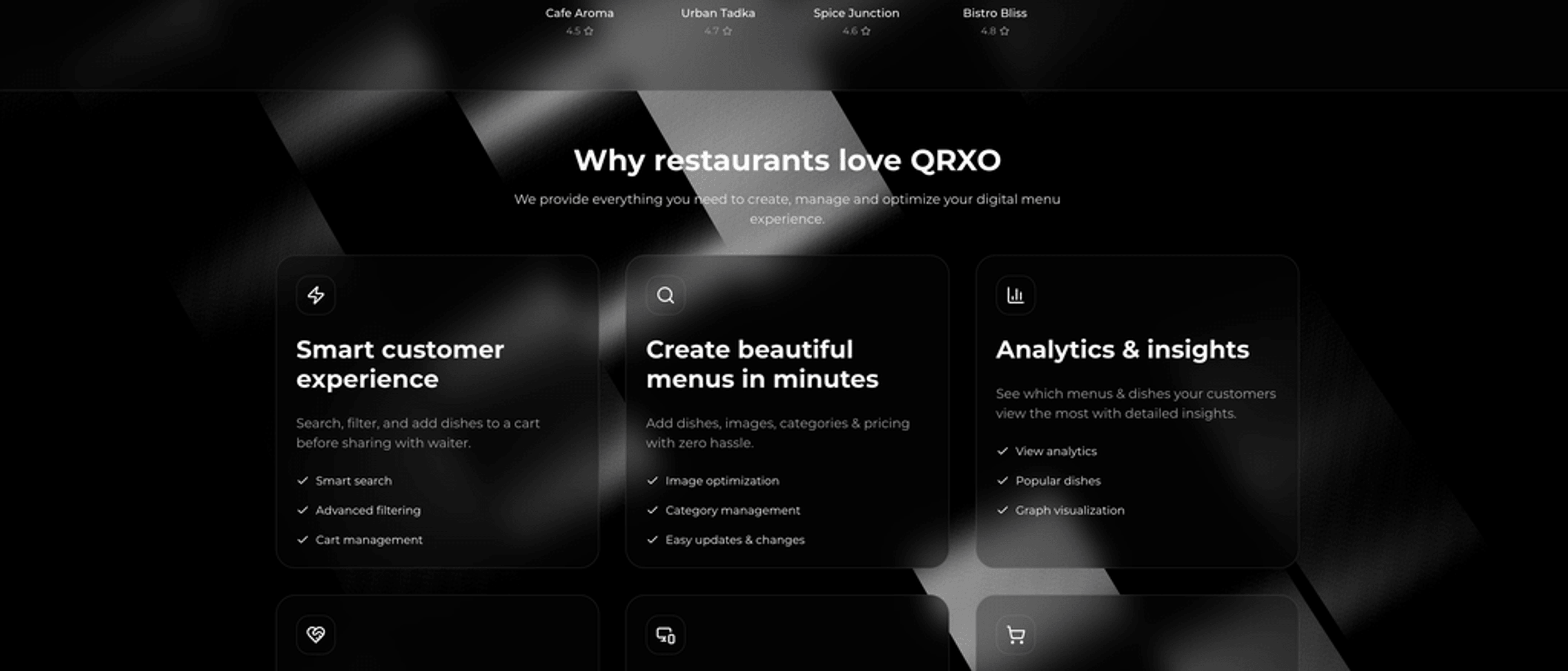
a SaaS product that helps small restaurants replace paper menus with QR-based digital menus. owners build menus in a dashboard, customers scan a stand, browse dishes with search and filters, build a cart, and share selections with staff through a dynamic QR the waiter scans. no payment processing on the dining floor, just faster order communication.
local restaurants in Kolkata were stuck between expensive national QR-menu vendors and cheap tools with bad UX. i wanted something affordable, personal, and actually pleasant for customers on their phones.
i built a dark, mobile-first menu experience with cart state, category filters, and compressed payloads for QR handoff. on the owner side I added menu editing, dish analytics, Razorpay subscriptions for Pro plans, and Clerk auth. the differentiator is the waiter PWA scan: the customers cart becomes a scannable QR that lands on the servers phone in seconds.
QRXO ships at qrxo.vercel.app with Pro pricing at ₹999/month, physical QR stands bundled, and a sales flow tuned for local restaurants (call, demo, WhatsApp). it is a full solo build from schema to payments.
What I actually owned
- ·product positioning, landing page, and local sales CTAs
- ·owner dashboard for menus, dishes, categories, and analytics
- ·customer menu with search, filters, cart, and dynamic waiter QR
- ·subscription billing with Razorpay and tier limits in Postgres
- ·image uploads and menu view analytics
What became difficult
- ·restaurant owners are not technical, so onboarding had to feel like filling a simple form, not configuring software.
- ·the customer menu had to work on spotty mobile networks with large dish photos.
- ·we needed a waiter flow that did not require every staff member to install a native app.
What I learned
vertical SaaS for non-technical buyers is mostly trust and support design. the product has to feel human: clear pricing, phone numbers on the page, and flows that work when the owner is standing in a noisy kitchen.
What surprised me
the waiter QR handoff became the feature owners cared about most. it is not flashy, but it removes a real pain point during rush hour.
Before → After
| Before | After |
|---|---|
| printed menus that are costly to reprint | scannable digital menus with photos |
| phone photos of paper menus | customer cart before talking to staff |
| waiters re-taking orders from scratch | waiter scan flow on any phone |
Small opinion
the best restaurant tech is invisible to diners and obvious to staff.
What I would improve now
i would add a lightweight onboarding checklist for first-time owners and a public demo menu route that sales can link without signing in. multi-language support is on the list once the core flows are stable.
Random things I remember
- ·i iterated on the landing page copy with real restaurant names from Kolkata for social proof placeholders.
- ·compressing cart data for QR encoding took more trial and error than I expected.
i can take a business problem from my own city, ship a complete SaaS stack, and sell it with a straight face.