OTC Layer: project facts
- Project
- OTC Layer
- Period
- 2024
- Role
- Lead Fullstack Engineer
- Summary
- P2P token and NFT exchange platform
- Description
- A peer-to-peer exchange where users could swap tokens and NFTs directly. I worked heavily on the frontend, set up our wallet authentication, integrated the smart contracts, and helped design the product layout with a small team of four.
- Domains
- Exchange Systems, Marketplace Design, Web3, Product Engineering
- Technologies
- Next.js, NestJS, TypeScript, Smart Contracts, Web3
- Ownership
- The entire frontend layout and design
- Ownership
- Wallet connection and session persistence layers
- Ownership
- Smart contract integration for trustless swapping
- Ownership
- Interactive orderbook and trade creation flows
- Ownership
- UX decisions around transaction safety warnings
- Learning
- When people are trading real assets, clarity is more important than speed. If they dont understand the wallet prompt, they will abort the trade.
- Professional signal
- I care about building secure, clear user interfaces for things that involve real-world transactions.
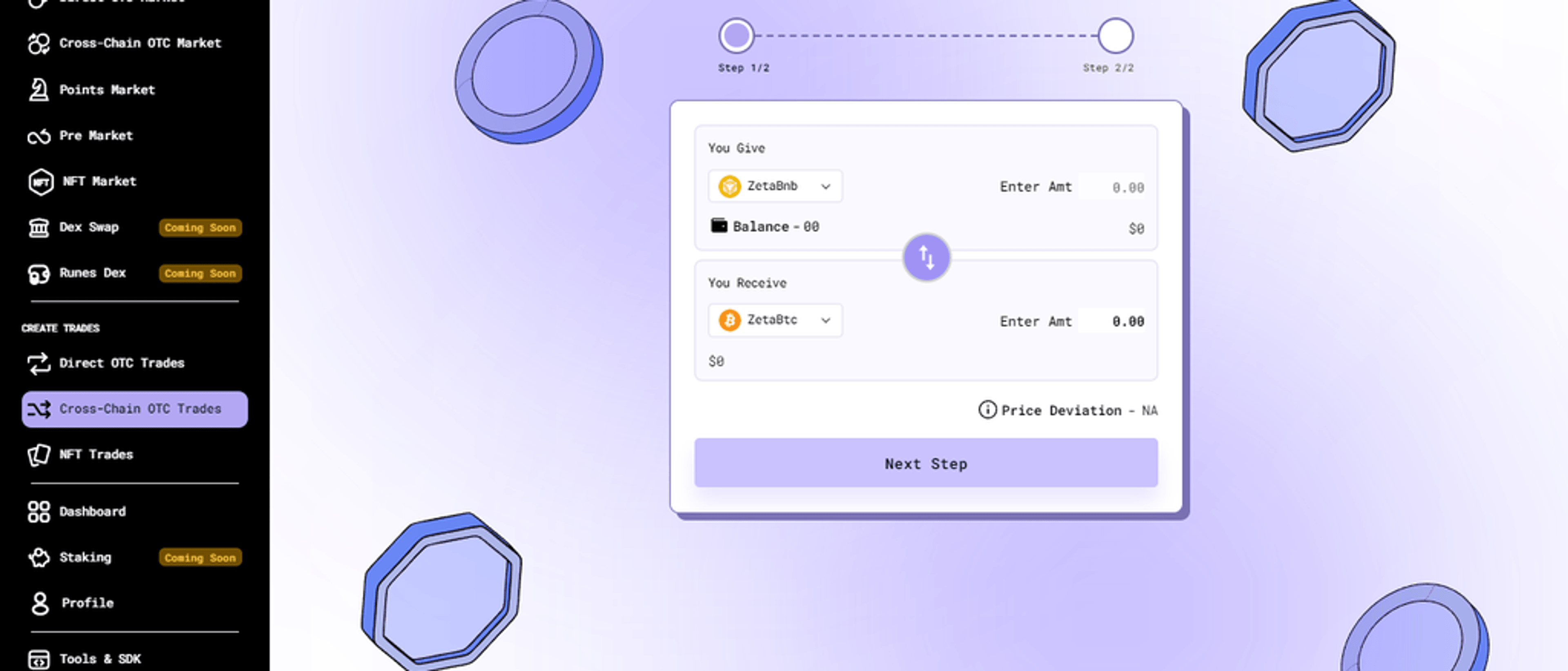
a peer-to-peer exchange where users could swap tokens and NFTs directly. i worked heavily on the frontend, set up our wallet authentication, integrated the smart contracts, and helped design the product layout with a small team of four.
we wanted users to swap tokens and NFTs directly without relying on any middleman.
i worked heavily on the frontend and built an interactive orderbook interface. i connected the UI to our smart contracts, made sure token listings updated in real time, and worked with our designers to simplify the transaction approval screens so users knew exactly what they were signing.
we built and tested a complete peer-to-peer trading system. even though we never ended up launching it publicly, it was a great exercise in building highly secure and interactive Web3 transaction systems.
What I actually owned
- ·the entire frontend layout and design
- ·wallet connection and session persistence layers
- ·smart contract integration for trustless swapping
- ·interactive orderbook and trade creation flows
- ·UX decisions around transaction safety warnings
What became difficult
trading directly with other people is stressful. the UI has to make it crystal clear what you are giving, what you are getting, and whether the transaction is actually safe. if a smart contract call fails or a wallet disconnects halfway through a trade, it can cause panic, so the app had to handle errors gracefully.
What I learned
when people are trading real assets, clarity is more important than speed. if they dont understand the wallet prompt, they will abort the trade.
What surprised me
people care less about transaction speed than understanding what they are signing.
Before → After
| Before | After |
|---|---|
| opaque centralized trading | trustless p2p swap flow |
| unclear smart contract state | clear step-by-step status |
| clunky transaction prompts | guided wallet signatures |
Small opinion
trust matters more than speed when money is involved.
What I would improve now
i would use a local indexing service like The Graph to fetch active orders instead of querying our database directly, which could slow down under heavy load. id also implement a more solid system for simulating transactions before they run, showing users the expected outcome in plain English.
Random things I remember
- ·we spent a lot of time drawing layouts on whiteboards trying to simplify a trade form that originally had 15 different inputs.
- ·i remember the relief when our first multi-token swap went through on the testnet without failing the smart contract.
i care about building secure, clear user interfaces for things that involve real-world transactions.